

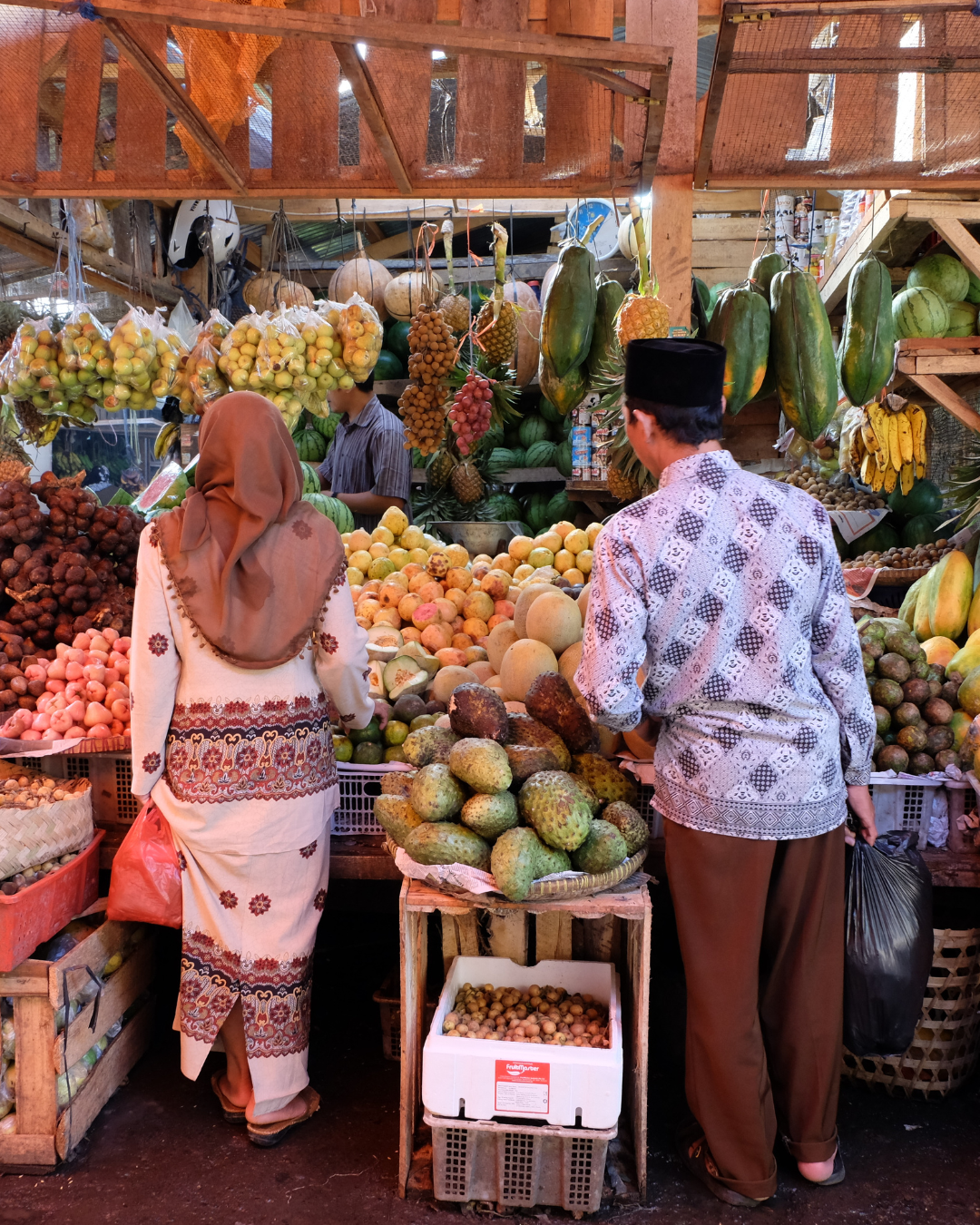
An analysis of how government communication strategies shaped public perception, market confidence, and spending behavior during Eid al-Fitr 2023–2025.
Key Findings at a Glance
Eid al-Fitr 2025 marks the first Eid under Indonesia’s new president, Prabowo Subianto. Policy discourse — including a planned VAT increase from 11% to 12%, the establishment of Danantara, and state budget efficiency measures alongside the free nutritious meal (MBG) program — drew mixed public reactions, with a majority expressing dissatisfaction.
This study analyzes how government public communication impacts Indonesian consumer purchasing power. The research spans mainstream and social media during the 90-day periods leading up to Eid al-Fitr in 2023, 2024, and 2025, complemented by an FGD with economists, media experts, and industry representatives.
Findings reveal that 2025’s pre-Eid coverage was significantly more politicized than previous years. Inconsistent government messaging and perceived lack of transparency contributed to public uncertainty — influencing perceptions of economic stability and, ultimately, suppressing purchasing power.
I. Background: Indonesia’s Economic Context
Indonesia’s economy is primarily driven by household consumption, which remains the largest contributor to GDP. According to Statistics Indonesia, household final consumption expenditure (HFCE) accounted for 54.04% of GDP in 2024, recording a 4.94% year-on-year increase — up from 4.82% growth in 2023.
Economic growth follows a non-linear trajectory marked by frequent fluctuations. Indonesia recorded 5.03% economic growth in 2024, showing no significant improvement since 2014. The first quarter of 2024 saw a quarter-to-quarter decline before rebounding in Q2, coinciding with Eid al-Fitr and the 2024 General Election.
Numerous reports — including those from LPEM FEB UI and the Center of Reform on Economics (CORE Indonesia) — identified a notable trend of stagnating or declining purchasing power during Eid al-Fitr 2025 compared to previous years.
“Public communications that are inaccurate or ambiguous in nature can erode public confidence, particularly impacting the weakening of purchasing power.”
Experts and academics have expressed concerns regarding the government’s communication approach, perceived as lacking transparency and responsiveness to criticism. This communication style has been criticized for failing to adequately address core issues, provide clear policy direction, or offer decisive solutions — compelling both the public and investors to exercise greater caution in their spending patterns.
II. Methodology: Research Design and Framework
Analytical Framework: Communication and Uncertainty Management
Government information dissemination plays a critical role in influencing individual decision-making and broader societal consumption and savings behavior. Socioeconomic uncertainty, compounded by limited or unclear government communication, pushes individuals to hesitate in consumption-driven choices, often opting to preserve financial resources.
This dynamic aligns with Communication and Uncertainty Management Theory, initially developed by Dale Brashers (2001), which examines how individuals process and respond to uncertainty stemming from received information, including public policy communication.
According to Brashers, how individuals respond to uncertainty depends on two factors: appraisal and emotion. Emotional responses manifest as positive, negative, neutral, or mixed — depending on how information is framed and delivered. Faced with economic uncertainty and inadequate government communication, individuals often opt for what they perceive as rational decisions (such as saving money) that ultimately lead to reduced consumption.
Research Methodology
This study employs a descriptive, mixed-methods research design combining quantitative data from mainstream and social media analysis with qualitative data from Focus Group Discussions (FGD). Big data analysis through Datamap Tools sampled 8,473 mainstream media outlets and social media platforms — including X (Twitter), Facebook, Instagram, TikTok, and YouTube — using keyword-based searches across four categories within the 90-day period leading up to Eid al-Fitr in 2023, 2024, and 2025.
Table 1 — Categories and keywords for the study in Bahasa Indonesia
| CATEGORY | KEYWORDS (BAHASA INDONESIA) |
| Economic Factors | harga barang, harga pangan, inflasi, penghasilan, ketidakpastian ekonomi, resesi, upah, pajak, suku bunga, subsidi, PHK, pemotongan gaji, BBM, nilai tukar rupiah, daya saing industri |
| Psychological Factors | takut belanja, menunda pembelian, mengurangi pengeluaran, hemat uang, menabung, kepercayaan ekonomi, pesimis ekonomi, khawatir masa depan, kecemasan finansial, enggan belanja |
| Market & Price Perception | harga mahal, harga wajar, menunggu diskon, harga tidak stabil, promo, harga sebelum lebaran, menunggu flash sale, tren baju lebaran, makanan berbuka, tiket kereta, tiket pesawat, harga BBM |
| Government Policies & Regulation | bantuan sosial, subsidi, pajak, kebijakan ekonomi, regulasi, kebijakan fiskal, anggaran negara, konsumsi domestik, kebijakan moneter, efisiensi anggaran, pengetatan anggaran |
Gathered data underwent processing including filtering, sentiment analysis, topic modeling, and trend detection, then analyzed through signal identification (negative, positive, neutral) using comparative analysis, thematic coding, and correlation analysis.
Qualitative exploration was conducted through an FGD involving eight participants — economic experts, media representatives, and association members — held on March 18, 2025, in Jakarta.
III. Findings: Eid al-Fitr Media Trends 2023–2025
Media coverage volume preceding Eid al-Fitr shows consistent patterns over three years: coverage consistently increases from 30 days before Eid, with a sharp spike 10–15 days prior, and peaks on the first and second days of celebration — driven by religious discussions, shopping activities, travel planning, and cultural topics.
Public Purchasing Power and Economic Factors
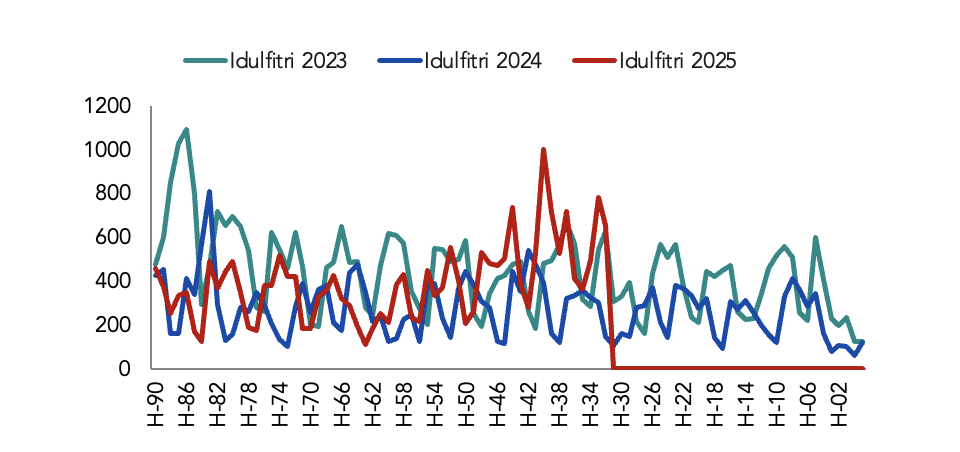
Figure 1. Negative signals on economic factors during Eid al-Fitr 2023-2025.
Sentiment Shifts
Public sentiment data shows a continuous, though not dramatic, decline in positive sentiment signals from 2023 to 2025. Negative sentiment increased by 4.2% in 2025 compared to the same period in 2024.
Positive sentiment remained dominant partly because media coverage was predominantly framed by government narratives consistently reassuring the public about stable economic conditions. This mainstream media narrative contrasted sharply with social media discussions, where new terminologies like “Indonesia gelap” emerged to criticize government policies and question economic direction.
Rising commodity prices, mass layoffs (PHK), and holiday allowance (THR) payment issues for informal workers dominated headlines. Social media interactions further highlighted economic uncertainty, leading to restrained public spending and consumption.
“Shopping trends before Eid al-Fitr remained sluggish through the third week of Ramadan — an anomaly that reflects Indonesia’s current domestic economic strain.” — CORE Indonesia, 2025
Economic Factors and Purchasing Power
Two spikes in negative signals regarding economic factors were higher than average in 2023 and 2025. The 2023 spike reflected concerns about economic uncertainty during post-COVID-19 recovery — considered normal as the government withdrew economic stimulus. These concerns were quickly alleviated throughout 2024.
The February 2025 spike is attributed to the ripple effect of mass layoffs at Sritex, impacting over 10,000 employees. Market and public sentiment became increasingly volatile after the government announced budget efficiency policies, followed by weakening of the rupiah exchange rate.
During the FGD, discussion was momentarily halted by breaking news of a trading halt on the Indonesia Stock Exchange (IDX) due to a 5% plunge in the Composite Index (IHSG) — a decline previously only seen during COVID-19.
Government Policy Communication and Its Effects
An anomaly in negative sentiment signals related to government policies during Eid al-Fitr 2025 appeared compared to the relatively flat trends of previous years. This anomaly was driven by increased expectations regarding the policy direction of the new government inaugurated in October 2024.
Social media keywords identified include: budget efficiency, budget cuts, VAT increase to 12%, free nutritious meal program (MBG), and “Indonesia gelap”. FGD participants noted these conversations serve as indicators of an informal recession where consumers prioritize low-expenditure consumption — similar to the lipstick effect phenomenon.
FGD participants also noted that the government’s economic communication approach has exacerbated psychological caution. This includes the VAT 12% policy retracted on New Year’s Eve following public backlash, and official responses to hashtags like #KaburAjaDulu that questioned public “patriotism.”
Positive sentiment coverage peaked at nearly 3,000 articles 34 days before Eid al-Fitr 2025 — a 44% increase from 2024, and a 154% increase from 2023. While media coverage serves as an economic sentiment proxy, distinguishing between actual market activity and perception management remains crucial.
Market and Price Perception
Key anomalies reported by FGD participants for the 2025 Eid period include:
- Increased sales of secondhand (thrifted) goods
- A supply-demand discrepancy: businesses prepared ample stock but did not see corresponding consumer demand, forcing inventory reduction
- Sellers of packaged goods (milk, biscuits, cheese, water) reluctant to maintain large inventories due to concerns about unsold products
- Meat producers experienced growth in general trade markets, though lower than the previous year (under 50%)
- Production disruptions due to strict import regulations, causing difficulties in obtaining raw materials — particularly sugar and salt
Psychological Signals
Psychological signal trends reflecting economic caution and shopping hesitancy rose significantly in 2025. Eid al-Fitr 2023 showed relatively calm and stable coverage. The 2024 period exhibited significant fluctuations coinciding with the Presidential Election. For 2025, trends showed more pronounced declining signals — reflecting strong psychological caution and growing public skepticism about economic and financial matters.
Experts argue the government must rigorously oversee spokespeople to prioritize principles of public communication theory: ethos (credibility), pathos (emotional connection), and logos (logical evidence).
IV. Conclusion
Three Key Conclusions
- Media coverage and discussion of public purchasing power consistently increased in 2025, with a sharp spike 10–15 days before Eid. Unlike previous years, coverage showed negative sentiment and increased political-economic discourse. Rising prices, mass layoffs, and economic crises dominated as negative themes. Unaddressed waves of negative news amplified public anxiety, restraining typically elevated Eid spending.
- Economic conditions, government policies and regulations, and market/price perceptions are identified as critical indicators affecting purchasing power. Topics like layoffs, proposed tax increases, budget efficiency, rupiah exchange rates, and Indonesia gelap dominated 2025 Eid conversations. Policy packages were assessed as generally appropriate, but discussion participants emphasized improved communication framing — with designated spokespersons, precise diction, and maintained empathy.
- Declining purchasing power strongly correlates with eroding public trust, compounded by psychological factors. Quantitative data revealed strong psychological caution signals reflecting shopping hesitancy and diminished financial confidence. Government policy communication is therefore crucial for reducing uncertainty that influences consumption behavior, particularly during Eid al-Fitr.
V. Policy Communication Recommendations
- Prioritize risk-based communication
In less ideal economic situations — such as weakening purchasing power — public policy communicators must assess potential risks arising from communication materials before release. Mapping public reactions and market responses to each statement should be conducted to better control impacts.
- Communicate government policies efficiently and transparently
Effective public communication means neither persistently reassuring the public by dismissing existing realities nor exaggerating efforts made. Government policy packages should be communicated clearly, straightforwardly, and with maintained empathy. In situations where the public restricts spending due to economic concerns, the government must transparently explain completed and planned measures to restore public trust.
- Map and target key stakeholders systematically
The government should prioritize key stakeholders as main communication targets. This includes not only investors, but also Key Opinion Leaders (KOLs) — policy experts and academics frequently sought by media for situational analyses. Ensuring these key opinion leaders absorb policy plans and directions serves as a strategic method to manage emerging narratives.
Reference:
Statistics Indonesia. (2025). Official Statistics News. Jakarta: Statistics Indonesia.
LPEM FEB UI. (2025). Indonesia Economic Outlook 2025. Depok, West Java: LPEM FEB UI.
LPEM FEB UI. (2025). LPEM Economic Experts Survey Semester I 2025: Evaluating the First 100 Days of the Current Administration. Depok: LPEM FEB UI.
CORE Indonesia. (2025). CORE Insight: Awas Anomali Konsumsi Jelang Lebaran 2025. Jakarta: Center of Reform on Economics.
Brashers, D. E. (2001). Communication and Uncertainty Management. Journal of Communication, 477–498.
Babrow, A. S. (2006). Uncertainty, Value, Communication, and Problematic Integration. Journal of Communication.
Checkley, L. C., & Piris, A. (2022). Public Communication During a Financial Crisis. Monetary and Capital Markets, 2.
Benedictis-Kessner, J. d. (2022). Strategic Government Communication About Performance. Political Science Research and Methods, 10(3), 601–616.
MacDonald, D., & Dildar, Y. (2020). Social and psychological determinants of consumption: Evidence for the lipstick effect during the Great Recession. Journal of Behavioral and Experimental Economics.
Tashakkori, A., & Teddlie, C. (1998). Mixed methodology: Combining qualitative and quantitative approaches. Sage Publications.
Cresswell, J. (2003). Research Design: Qualitative, Quantitative, and Mixed Methods Approaches. Thousand Oaks, California: SAGE Publications.
Masduki. (2020). Blunders of Government Communication. Jurnal Ilmu Sosial dan Ilmu Politik, 97–111.
Lakshmi, A. A., & Mariska, D. (2025, March 18). Indonesian stocks tumble 4% on concerns over economy. Financial Times.
Maulida, R. A. (2025, February 19). Komunikasi publik kabinet ‘gemoy’ Prabowo belum transparan dan tak hiraukan kritik. The Conversation.
Universitas Gadjah Mada. (2025, February 17). UGM Economist Urges Government to Anticipate Declining Consumer Purchasing Power. ugm.ac.id.
World Bank. (2023). GDP growth (annual %) — Indonesia. data.worldbank.org.
CELIOS. (2024). Outlook Ekonomi Digital 2025. Jakarta: Center of Economic and Law Studies.
Saleh, S., Wardani, D. T., & Ivantri, M. A. (2019). Ramadan, Eid Ul Fitr, and Inflation. Jurnal Ekonomi & Studi Pembangunan, 135–150.
Hosen, Z. (2024). Effect of Ramadan on purchasing behavior: a panel data analysis. International Review of Economics, 71.
CORE Indonesia. (2025). CORE Insight: Awas Anomali Konsumsi Jelang Lebaran 2025. Jakarta: Center of Reform on Economics.
Discover Our Findings
